
Asian Grocer Online
Asian Grocer Online App
Powered by UMALL
Code AGO10: $10 off your first app order

Scan to open or download the app.
Download app
🚚 Free Sydney Delivery on Orders $69+
💰 Delivery Fees Now Up to 40% Cheaper
🚀 Order by 12pm for Same-Day Delivery


Yaki Udon Lite with Konjac: About 115 Fewer Calories

Udon and one pack of konjac across three bowls
About 20% fewer calories than the standard version, for a similar amount of food per serve. Half-and-half by prepared noodle weight; konjac must be drained and dry-fried. Not kitchen-tested.
Keep a big bowl while swapping part of the udon for rinsed, dry-fried konjac noodles. Our estimate is about 415 kcal per serving versus 530 kcal for the original: about 115 fewer calories. Buy the Japanese noodles and Asian ingredients at Umall.
Ingredients for 3
Noodles, pork and vegetables
-
250 g
frozen udon noodlesOne 250 g portion; use prepared noodle weight, not dry noodle weight.

-
1 pack (360 g), rinsed and drained
plain shirataki noodlesNet pack weight includes liquid; no drained weight is stated. Use one pack, rinsed and drained, then prepare as the packet directs. Calories remain an estimate based on 250 g drained konjac.

-
200 g
thin pork belly slicesThaw in the fridge and cut into bite-size pieces.

-
200 g
green cabbageCut into short strips.

-
100 g
shiitake mushroomsRemove tough stems and slice.

-
80 g
carrotCut into thin matchsticks.

-
30 g
spring onionsSlice whites and greens separately.


Simple soy-oyster seasoning
- 30 ml soy sauce
- 15 ml oyster sauce
- 30 ml water
- 5 g sugar
- 10 ml neutral oil
Packets & measures
- An Australian tablespoon is 20 ml.
- Estimated nutrition retains the model assumption of 250 g drained konjac for one 360 g net-weight pack.
- The pack and product description do not state drained weight, so actual drained yield and energy may vary.
Food safety
- Keep chilled food at 5°C or colder and thaw meat in the fridge.
- Use separate utensils and plates for raw and cooked meat.
Allergens
- Contains wheat, soy and mollusc.
- Not gluten-free, zero-carb or an all-konjac recipe.
About this version
- The mixed noodles feel different from all-udon, with a firmer, slightly springy konjac strand.
- Nutrient values are estimates; our team has not yet taste-tested this mixture.
- The nutrition model does not reach a one-third reduction; no low-energy or one-third calorie claim is made.
Method
-
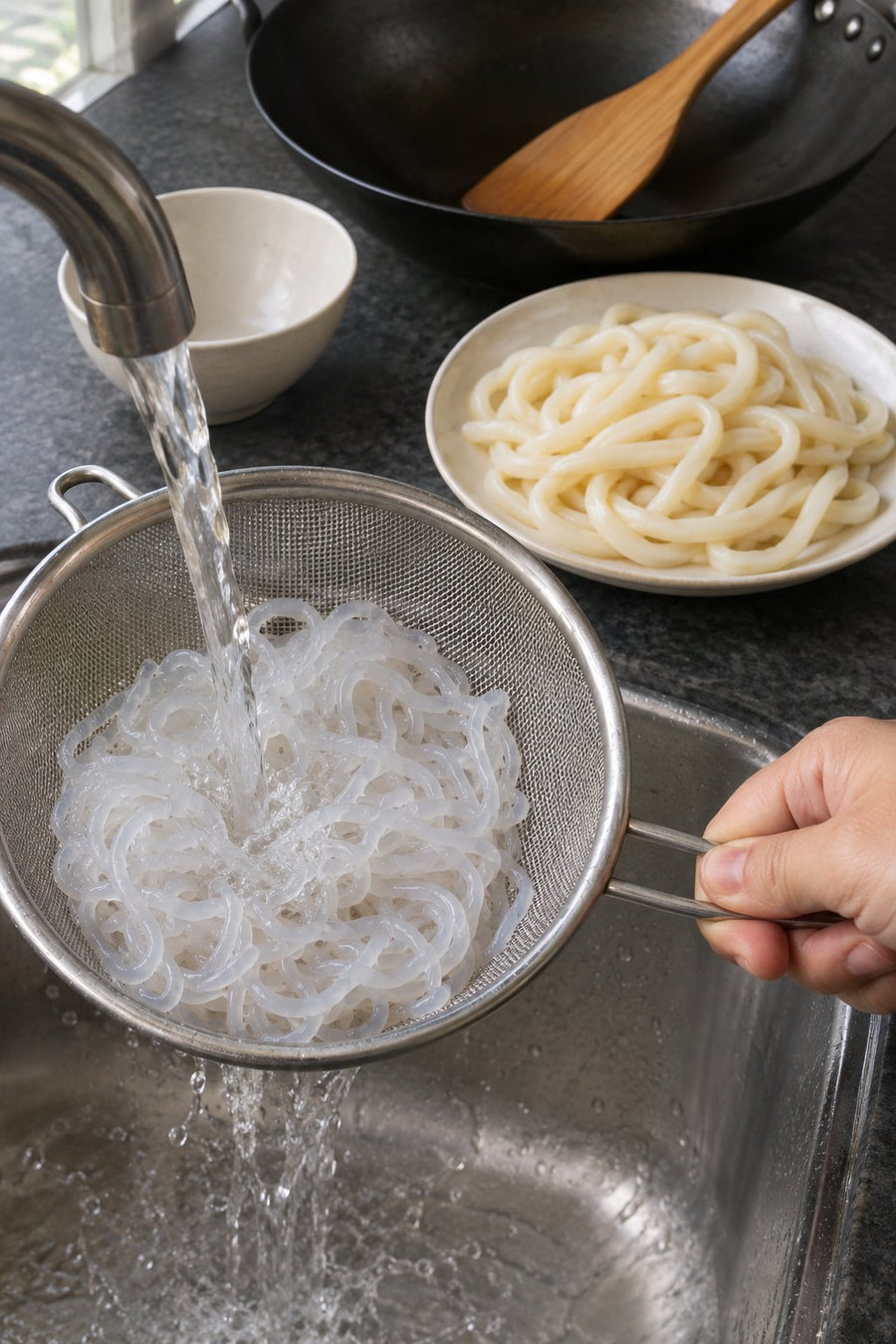
Step 1Rinse the shirataki
Drain and rinse the plain shirataki thoroughly under running water. Prepare as its packet directs; if instructed, briefly boil for 1–2 minutes, then drain. Snip a few times for manageable strands.
-
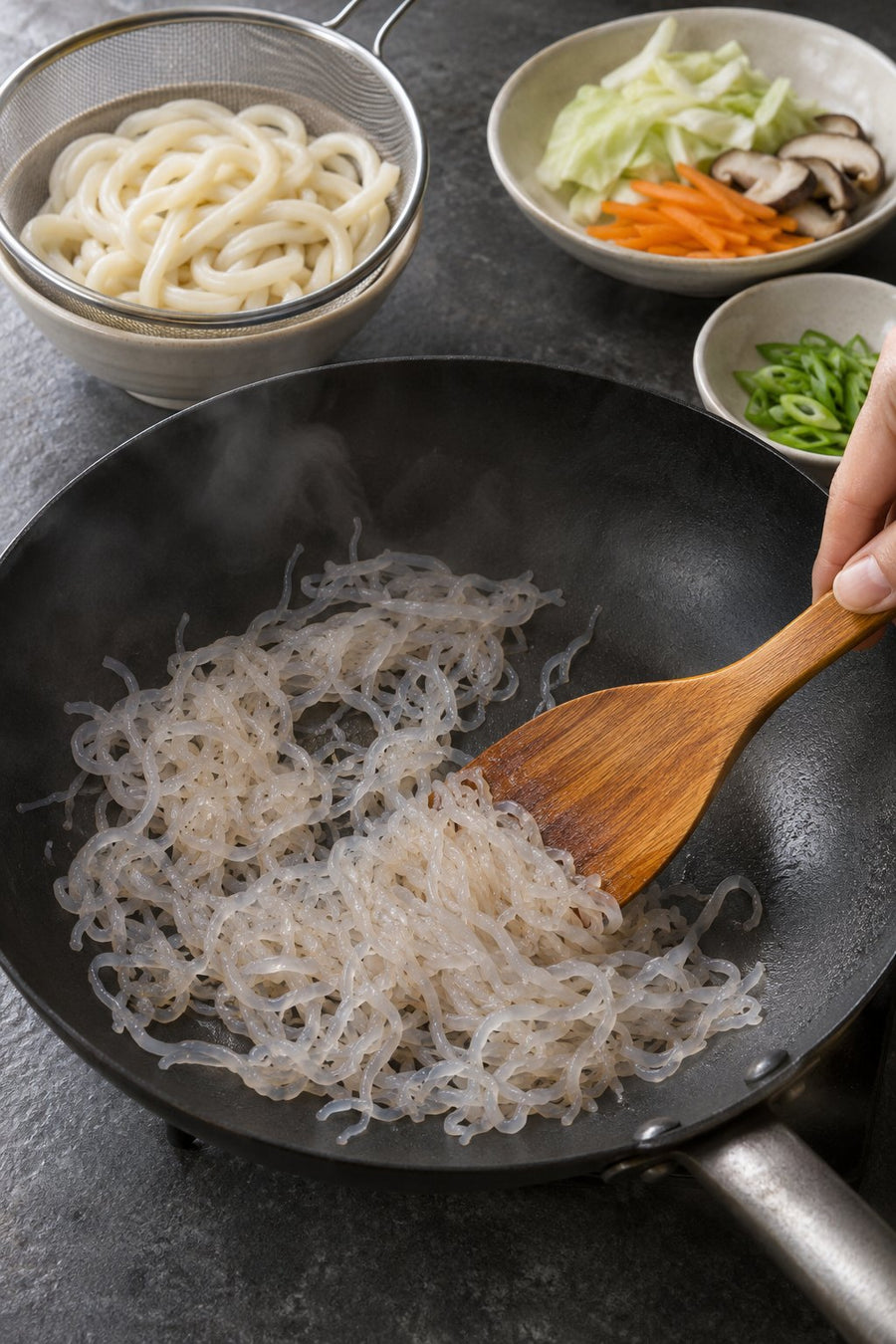
Step 2Dry-fry and loosen the udon
Put the drained shirataki in a dry nonstick pan over medium heat for about 3–5 minutes, stirring until excess moisture is gone. Set aside. Loosen the 250 g udon according to its packet and drain well. Mix the sauce in a small bowl.
-
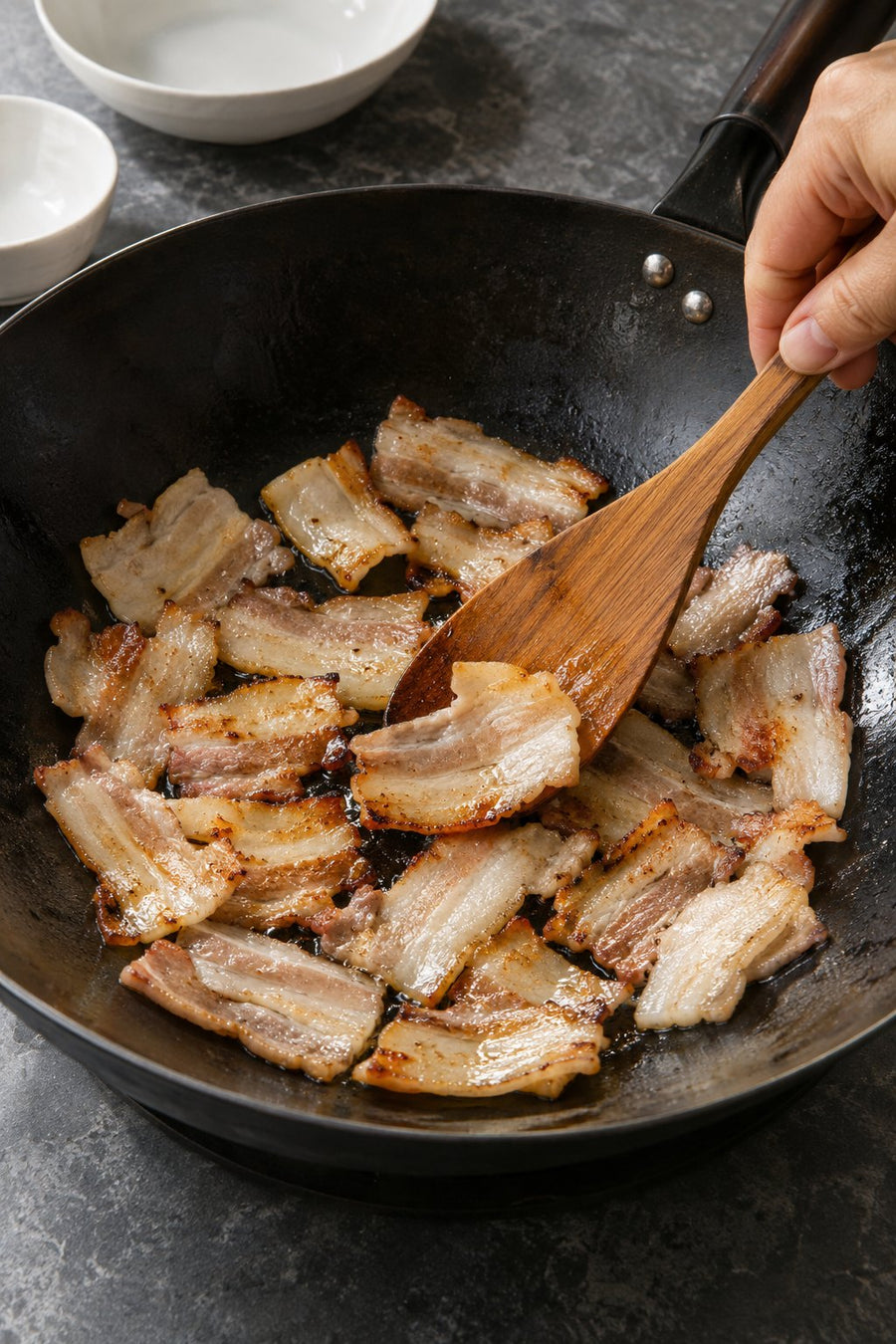
Step 3Brown the pork
Heat the oil in a large wok over medium-high heat. Add the thin pork in a single layer and stir-fry for about 3–4 minutes until cooked through. Work in batches if needed.
Check 75°C in a piece thick enough to probe.
-
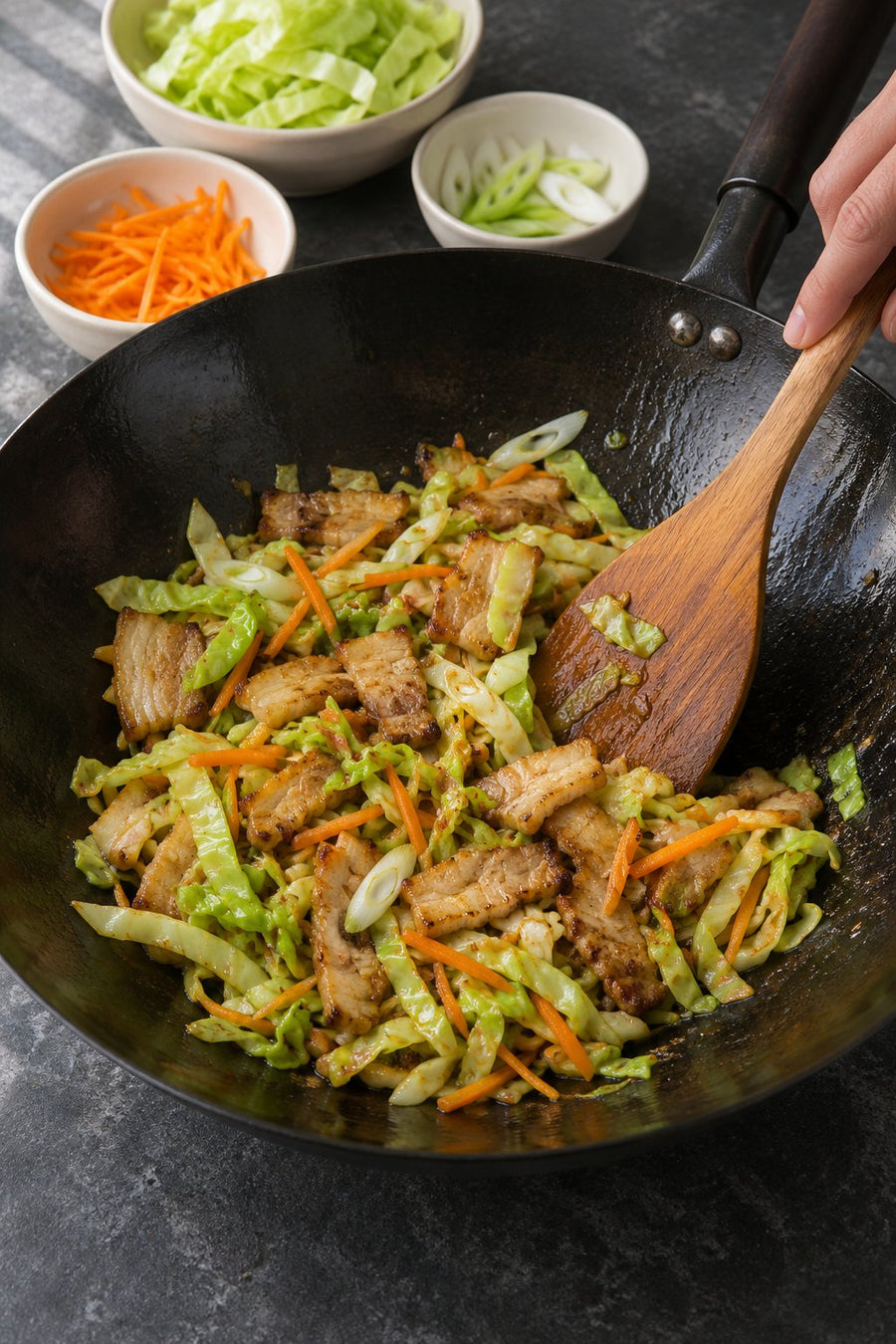
Step 4Add the firm vegetables
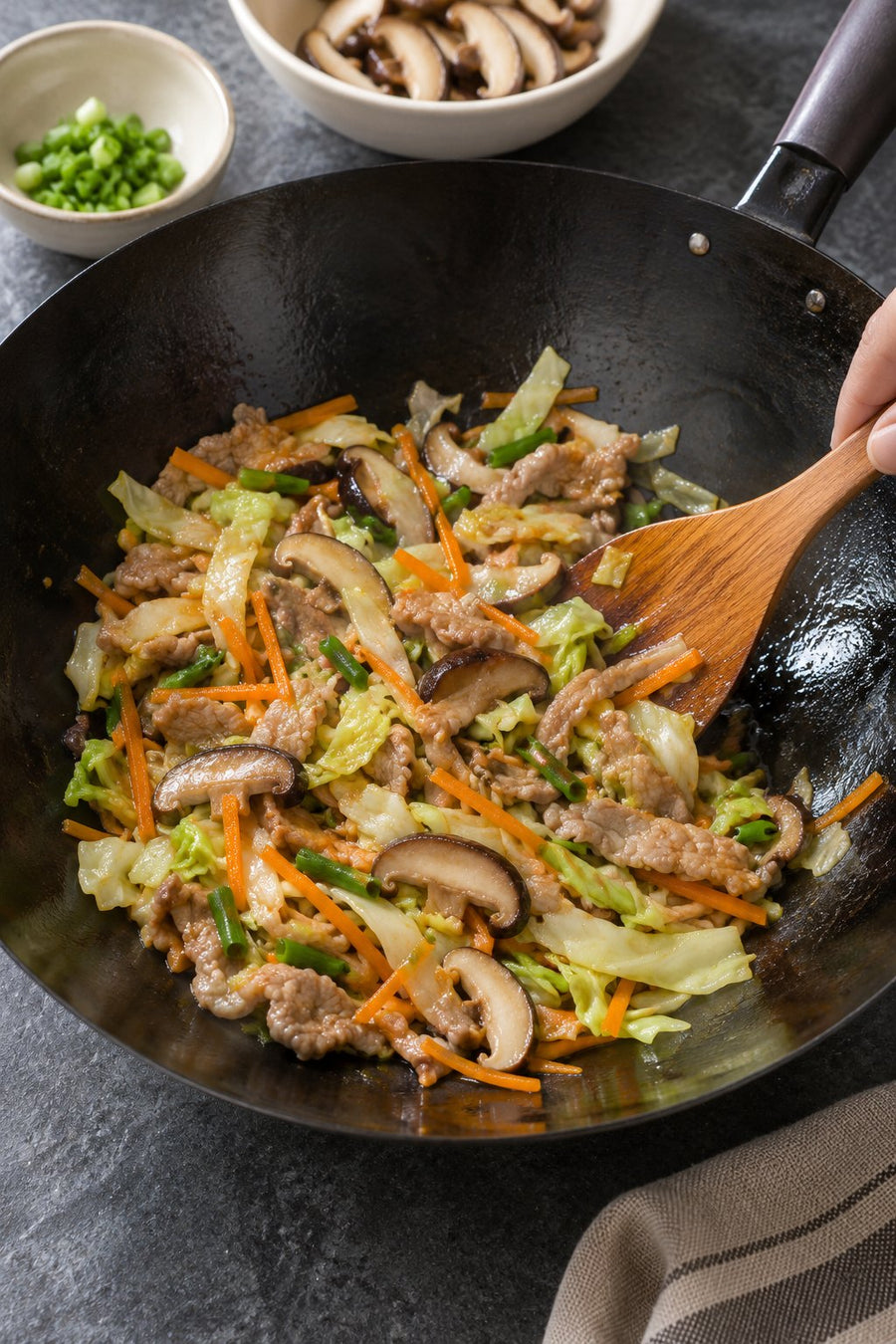
Add the carrot, cabbage and spring onion whites. Stir-fry for about 3 minutes, turning frequently, until the cabbage starts to soften but retains some bite.
-
Step 5Cook the mushrooms
Add the sliced shiitake. Stir-fry for about 2 minutes until softened and cooked through. If the pan is crowded, divide the mixture between batches.
-
Step 6Combine the two noodles
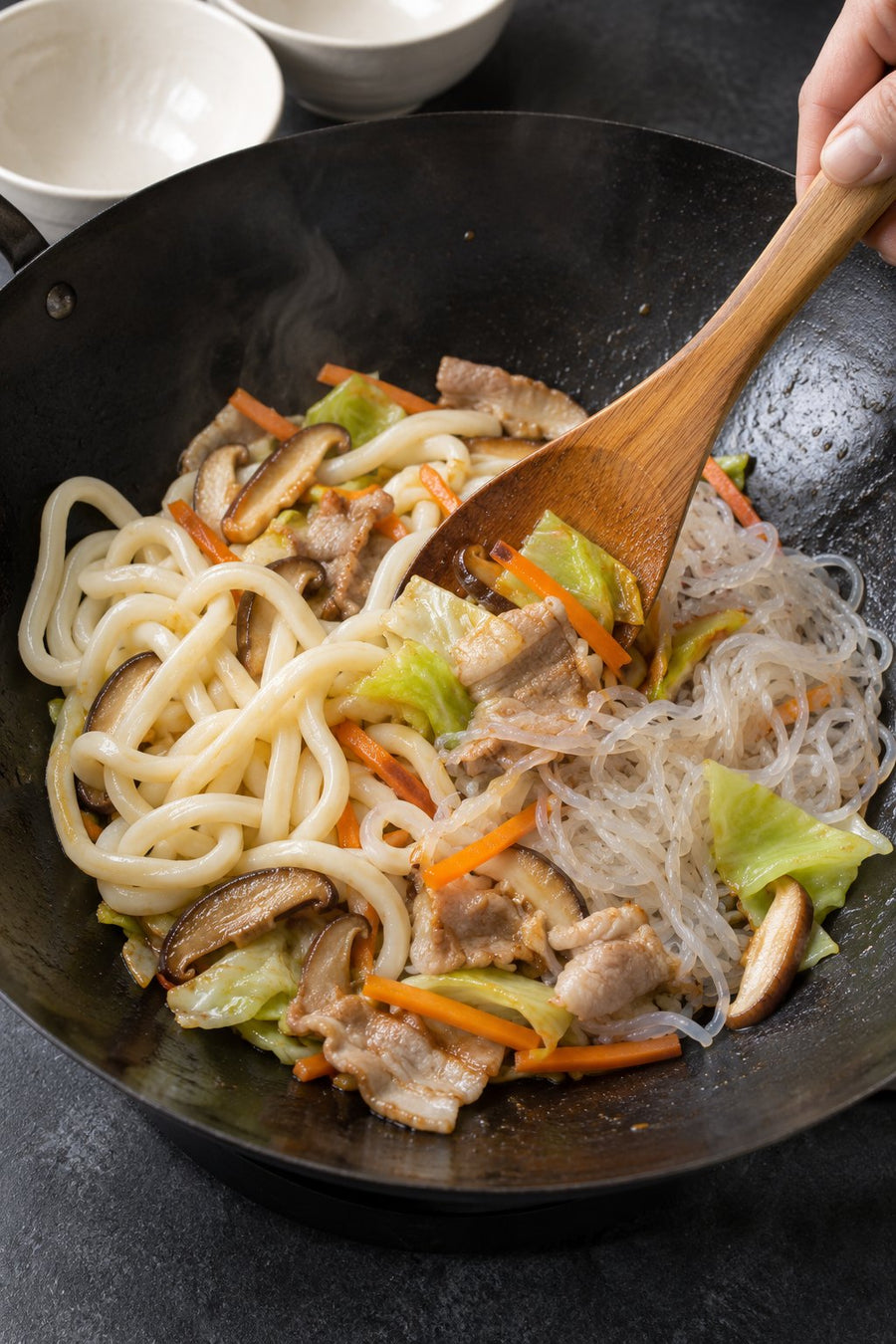
Add the 250 g prepared udon and the rinsed, drained and dry-fried contents of 1 pack (360 g) shirataki. Lift and turn gently so thick wheat strands and thin translucent konjac strands are evenly mixed.
-
Step 7Toss with the sauce
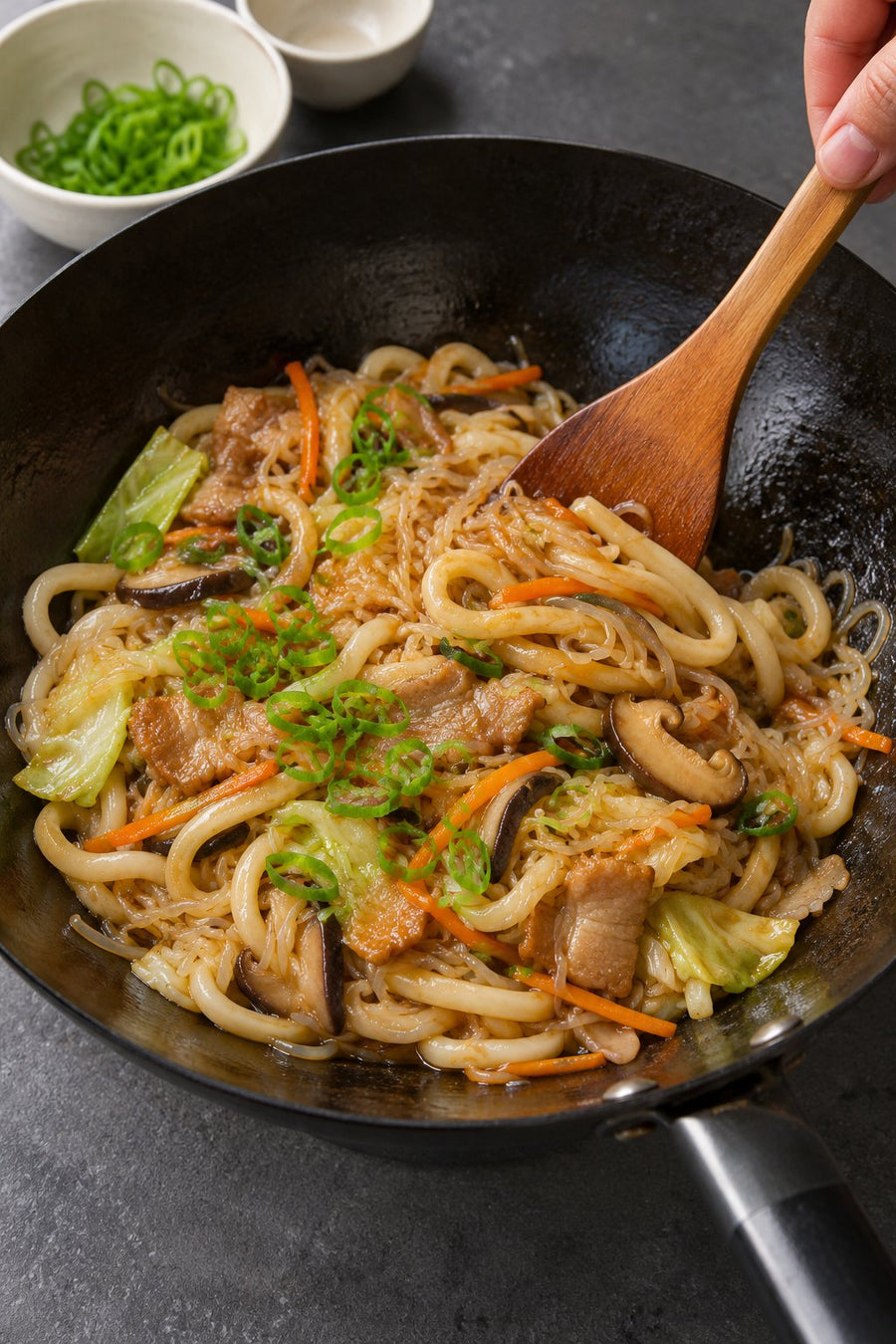
Pour the sauce around the pan edge. Toss for about 1–2 minutes until everything is steaming hot, the sauce coats the noodles and no pool remains. Add spring onion greens.
-
Step 8Serve and compare the texture
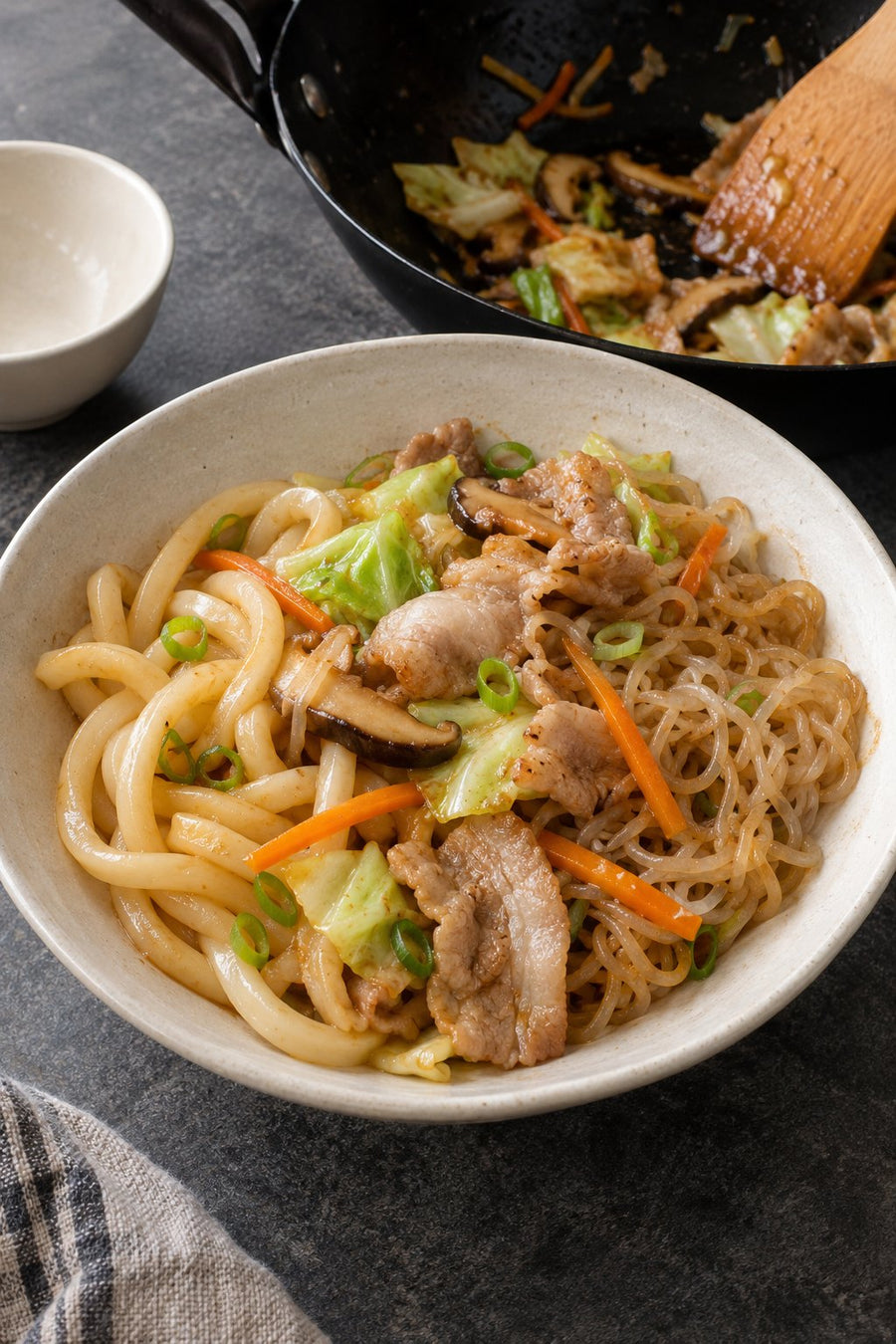
Divide among three bowls and serve hot.
- The bowl still includes udon; the shirataki is thinner, springier and less absorbent.
- It will not have the same chew as an all-udon bowl.
- This version has not been kitchen-tested by our team.
Watch it in 23 seconds
Get the AGO app
A$10 off your first app order with code AGO10

Scan with your phone camera
Get the appShop more: Japanese Noodles
Miyakoshi Japanese Fresh Udon Noodles - 200g
$1.49$1.99
Japanese Gunma Konjac Noodles - 360g
$4.79$5.79
Marutai Rich Tonkotsu Ramen - 194g
$5.19$5.69
Shop more: Konjac & Tofu Noodles
Yuquan Konjac Noodles - 280g
$1.99$2.59
Japanese Gunma Konjac Noodles - 360g
$4.79$5.79
Jun Japanese Style Konjac Knots - 300g
$2.49$3.09
Konjac Shirataki Knots - 230g
$2.99$4.09
Japanese Gunma Konjac Blocks - 250g
$2.19$2.79
Shop more: Pork Belly
UMALL Meat Frozen Pork Belly Strips – 1kg
$21.99$23.49
Umall Skinless Pork Belly 1kg
$19.99$28.59
Osawa Frozen Pork Belly 250g
$8.29$10.19
Beifang Frozen BBQ Pork Belly - 225g
$8.99$10.29
Hengyee Stewed Pork Sliced - 397g
$7.19$7.39
Why this version works
- Use 250 g prepared udon plus 1 pack (360 g) konjac, rinsed and drained; the pack does not specify drained weight.
- Rinsing and dry-frying konjac removes packing liquid and excess surface water.
- The estimate is about 115 fewer kcal per serving, not half the meal calories.
- Konjac noodles are used in Japanese cooking, including sukiyaki; they have their own texture.
- Pork, vegetables and seasoning stay the same as the original; portion size still matters.
Swaps and variations
- Classic recipe: Yaki Udon with Frozen Noodles, Pork Belly and Mushrooms has a separate recipe page.
Nutrition per serve
| Per serve (1/3 of recipe) | About |
|---|---|
| Energy | 1738.0 kJ (415 kcal) |
| Protein | 20.7 g |
| Fat, total | 21.7 g |
| Carbohydrate | 30.9 g |
| sugars | 7.9 g |
| Sodium | 1058.0 mg |
How we estimated this
Estimated per serving using FSANZ Australian Food Composition Database Release 3 and the stated ingredient proxies; brands, cooked yield and portions vary. All listed oil and sauce are included.
Classic about 530 kcal; this version about 415 kcal per serving, approximately 21.8% lower in this model. The comparison model replaces 250 g udon with an assumed 250 g drained konjac.
Questions about Yaki Udon Lite with Konjac: About 115 Fewer Calories
Where can I buy the ingredients in Sydney?
Use the shopping list for current Umall and AGO availability and suitable swaps. Delivery covers Sydney, Wollongong and Canberra.
Is this all konjac?
No. Use 250 g prepared udon and 1 pack (360 g) plain shirataki, rinsed and drained, for three servings. The pack does not state drained weight. It is not gluten-free.
Does it taste exactly like normal udon?
No. Shirataki is thinner, springier and absorbs less sauce. Our team has not yet kitchen-tested this mixture.
How much energy does the swap save?
About 21.8% in this ingredient model, keeping pork, oil, vegetables and sauce the same; not a one-third reduction.
What is included in the calories?
Estimated per serving using FSANZ Australian Food Composition Database Release 3 and the stated ingredient proxies; brands, cooked yield and portions vary. All listed oil and sauce are included. Classic about 530 kcal; this version about 415 kcal per serving, approximately 21.8% lower in this model. The comparison model replaces 250 g udon with an assumed 250 g drained konjac; the actual pack yield is unknown. It does not reach a one-third reduction; no low-energy or one-third calorie claim is made. Estimated nutrition retains the model assumption of 250 g drained konjac for one 360 g net-weight pack. The pack and product description do not state drained weight, so actual drained yield and energy may vary.
Sources and credit
Method developed for Umall from the references below, with our own quantities for Australian home kitchens. Nutrition is an estimate; reference photographs are generated illustrations.

